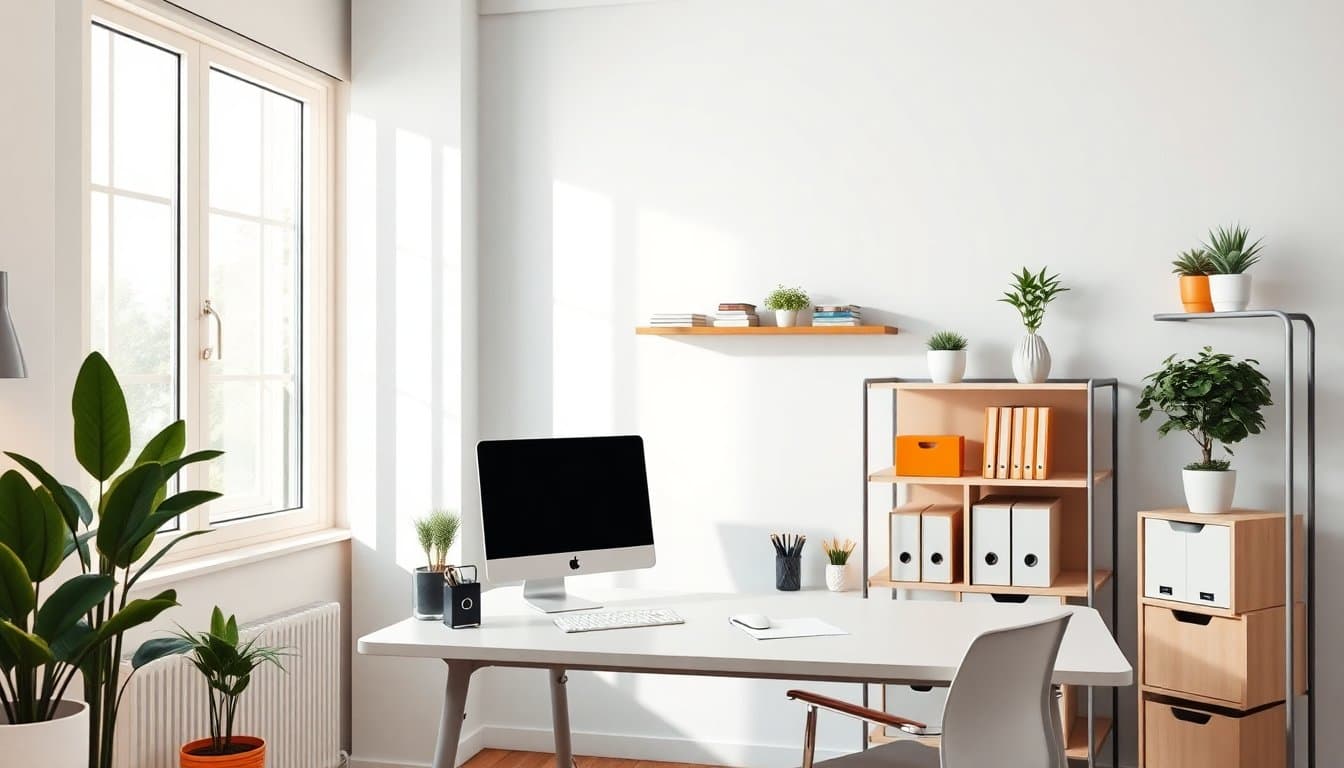
Let's do some uncomfortable math.
The average knowledge worker spends 4.3 hours per week searching for misplaced items, according to the National Association of Professional Organisers. That's not a typo. Four hours. Every. Single. Week.
Now multiply that by your hourly rate. If you value your time at $60/hour (modest for most professionals), that's $258 per week spent hunting for things instead of doing actual work.
Per year? $13,416.
Your messy desk isn't just an eyesore. It's a leak in your wallet the size of a used car payment.
The Desk That Was Bleeding Money

Look at this workspace. It probably looks familiar.
Scattered papers. A stack of books that's been "temporary" for six months. Cables breeding under the monitor. A coffee mug from... when was that meeting? Sticky notes with passwords you definitely shouldn't have written down.
This desk isn't messy because its owner is lazy. It's messy because life happened and there was no system to catch it.
But here's what most people don't realize: every item out of place is a micro-decision waiting to ambush you. Every visual distraction competes for your attention. Princeton researchers found that clutter literally reduces your brain's ability to focus and process information.
You're not just losing time searching for your stapler. You're losing cognitive bandwidth all day long.
The $47 Transformation
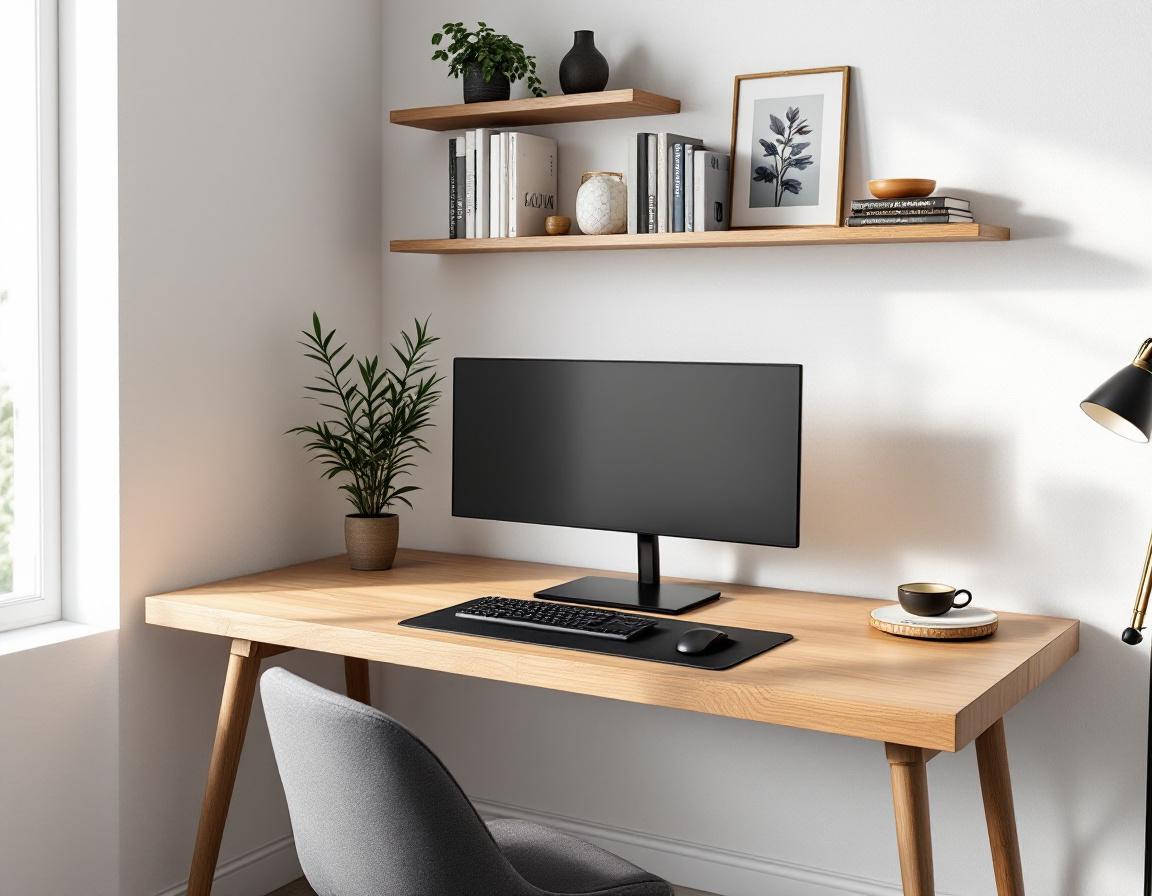
Now look at the "after."
Same corner. Same natural light. Same person (theoretically). But a completely different economics equation.
The Scandinavian approach isn't about minimalism for aesthetic points. It's about eliminating the productivity tax you pay every time your eyes land on chaos.
Here's what changed:
Everything Has an Address
In the messy desk, items lived wherever they landed. In the clean desk, every object has a designated home:
- Monitor on a stand (not buried behind paper mountains)
- One leather desk pad defining the "active work zone"
- Floating shelves for books and reference items
- A single plant (sanity is priceless)
When everything has an address, you stop burning time playing detective.
Vertical Storage = Horizontal Freedom
Those floating shelves aren't decoration. They're reclaimed real estate. Every book on the shelf is one less book on your desk. Every item stored vertically is square inches returned to your workspace.
The math: Two 36" shelves = 6 square feet of storage that costs you zero desk space.
The Cable Exorcism
Visible cables are visual noise. They make a space feel chaotic even when everything else is tidy.
The fix is unsexy but effective: wireless keyboard/mouse ($50), one cable management tray ($18), ten minutes of routing. Total investment: under $70. Cognitive benefit: immeasurable.
The One-Coffee-Cup Rule
Multiple mugs = multiple days of "I'll deal with that later." One designated cup that gets washed daily = one less thing pulling at your attention.
Small? Yes. But productivity is won in the margins.
The ROI That Doesn't Make Sense
Let's be conservative. Say this transformation only saves you 2 hours per week instead of the full 4.3. At $60/hour, that's:
- $120/week in reclaimed productivity
- $6,240/year back in your pocket
The floating shelves cost $40. The desk pad was $25. The cable management stuff was maybe $20. The plant was $12.
Total investment: ~$100
Payback period: 6 days
This isn't organizational advice. It's arbitrage.
See Your Own Numbers

Here's the thing about transformation photos: they're aspirational, but they're someone else's space. Your desk has different dimensions, different light, different chaos.
That's why we built Neat Pilot↗. Upload a photo of your actual workspace—yes, the messy one—and watch AI transform it in seconds. See exactly what your clean desk looks like before you buy a single shelf bracket.
Try Scandinavian. Try Modern. Try Japandi. Find the style that makes you actually want to sit down and work.
Then do the math on what that's worth.
Your desk isn't just where you work. It's where $13,000 goes to hide.