What if your cluttered home office could become a sleek modern studio, a bold contemporary workspace, OR a zen minimalist retreat? Before AI-powered visualization, the answer was "pick one and hope for the best." Today, you can explore every direction before committing to any of them.
In this post, I'm sharing three dramatically different transformations of the exact same cluttered home office. Same desk, same chair, same mountain of cables — but three completely different design outcomes. The best part? You can try this with your own space in under 60 seconds.
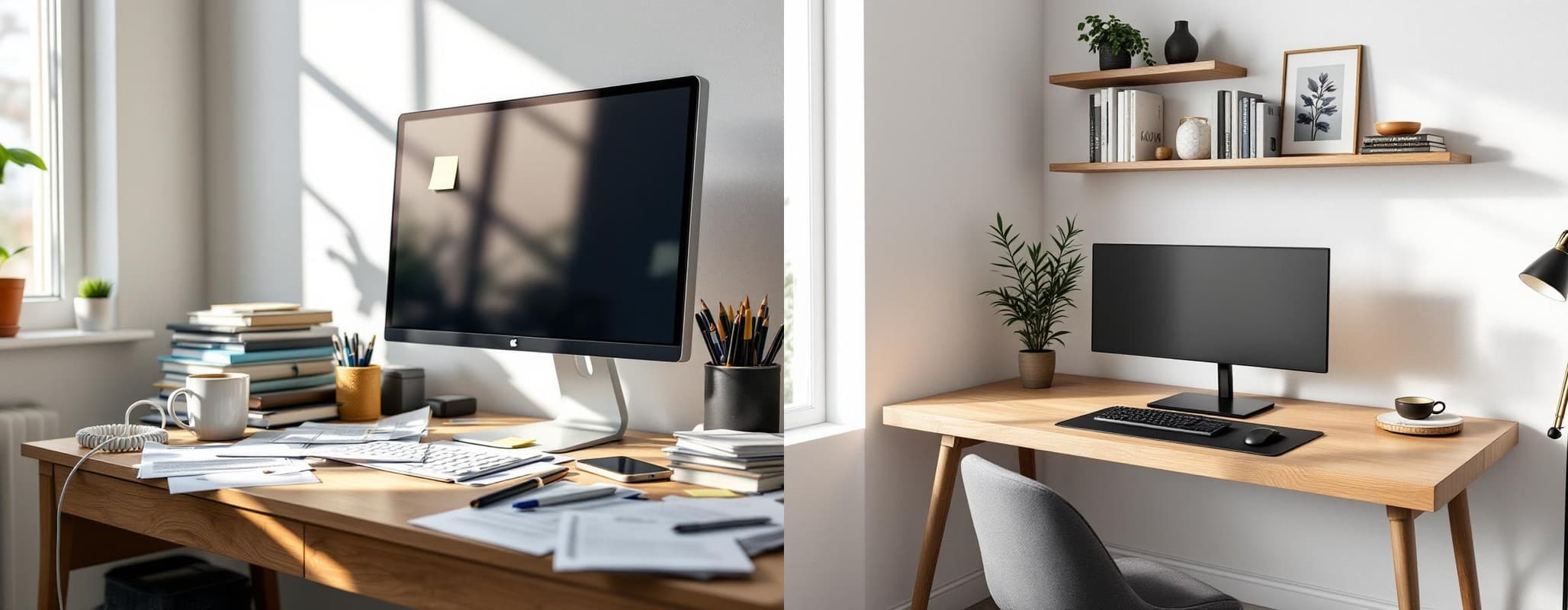
The Starting Point: A Real Home Office
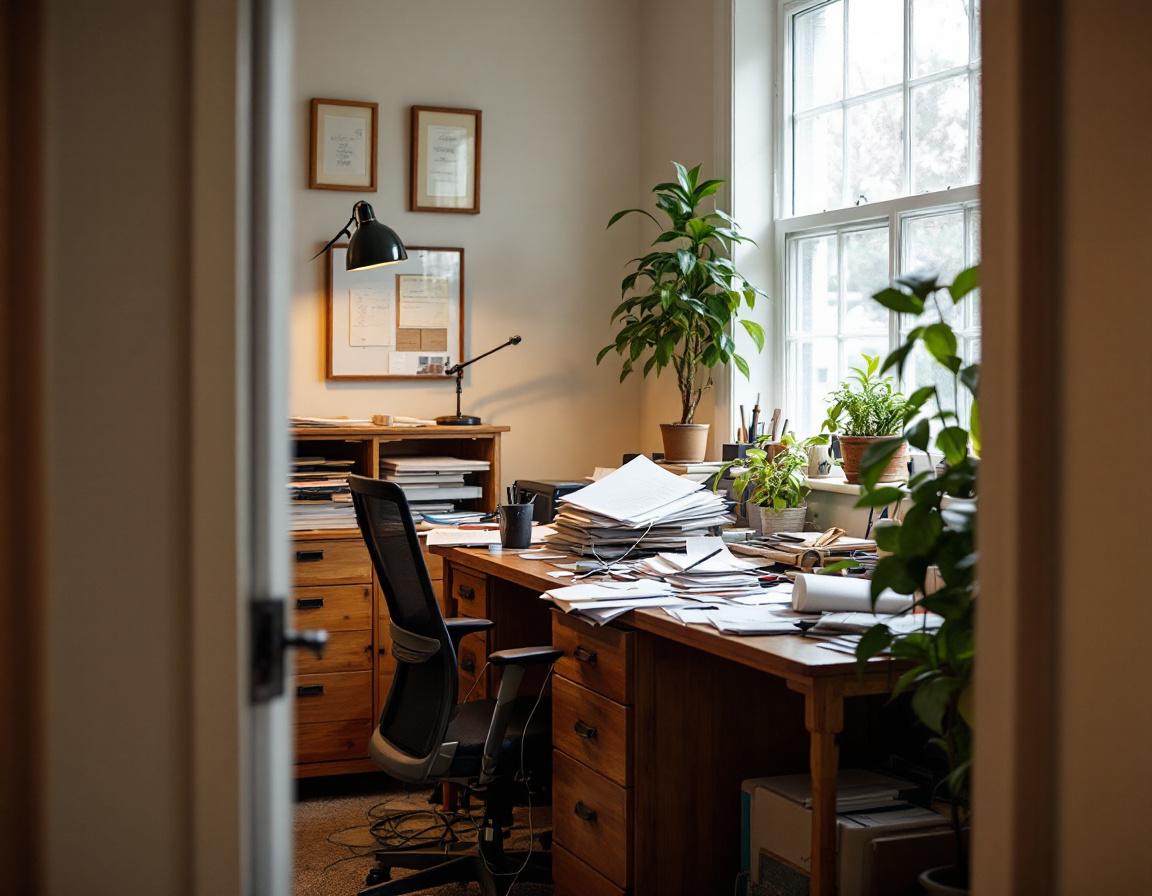
Let's be honest about what we're working with. This is a dedicated home office that's accumulated the usual suspects: papers stacked on every surface, cables running in every direction, mismatched storage bins, and that one corner where "I'll deal with that later" turned into permanent clutter.
Sound familiar? According to the National Association of Professional Organisers, the average person wastes 4.3 hours per week just searching for things in a disorganized workspace. That's over six full work weeks per year lost to clutter.
But here's what makes this exercise different from a typical "clean your desk" article: we're not just tidying up. We're reimagining the entire aesthetic of the space — and AI lets us see three completely different futures for the same room.
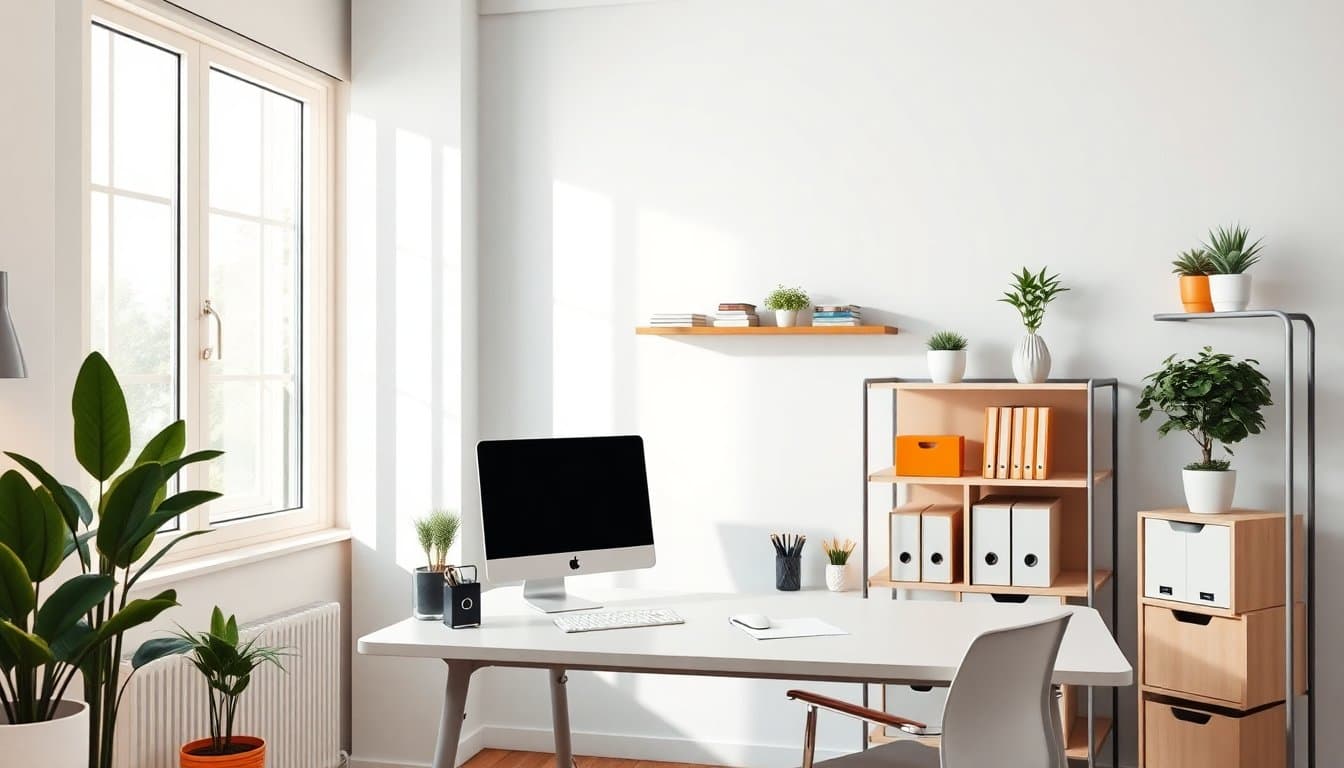
Transformation 1: The Modern Studio
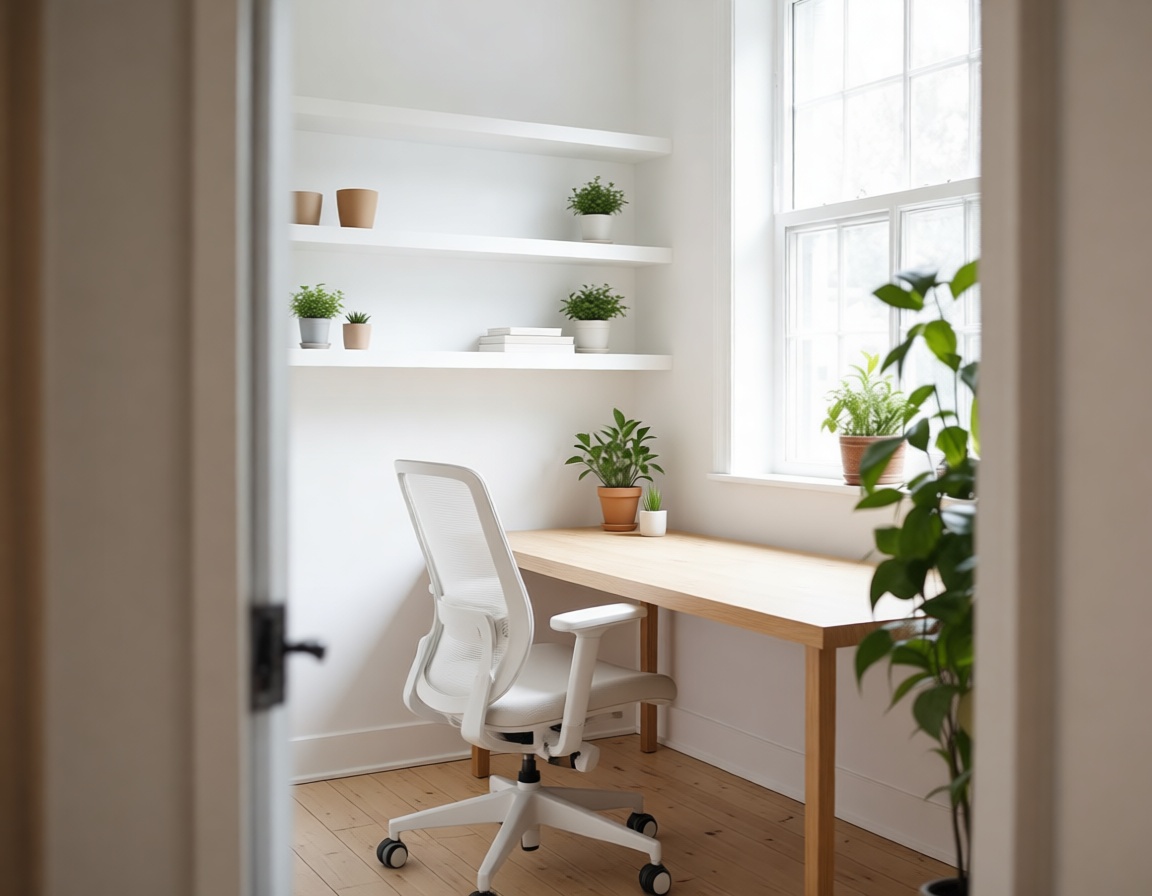
The Vision: Bright, airy, and plant-filled — a workspace that feels like a breath of fresh air.
What Changed: The dark cherry desk is gone, replaced by a light blonde oak workstation that practically glows in the natural light. White floating shelves line the wall where the cluttered bookcase used to be, holding small potted plants and a few carefully chosen items. The black leather chair gives way to a white mesh ergonomic chair, and the entire color palette shifts to whites and warm wood tones. Greenery is everywhere — on the shelves, on the desk, by the window — adding life without adding clutter.
Why It Works: The all-white foundation makes the room feel twice as large, while the blonde wood and abundant plants add warmth so it never feels sterile. Every surface has breathing room. The natural light flooding through the window now bounces off white walls instead of being absorbed by dark furniture.
Who This Works For: People who want a professional backdrop for video calls, minimalism fans who still need a functional workspace, anyone whose current office makes them feel overwhelmed the moment they sit down.
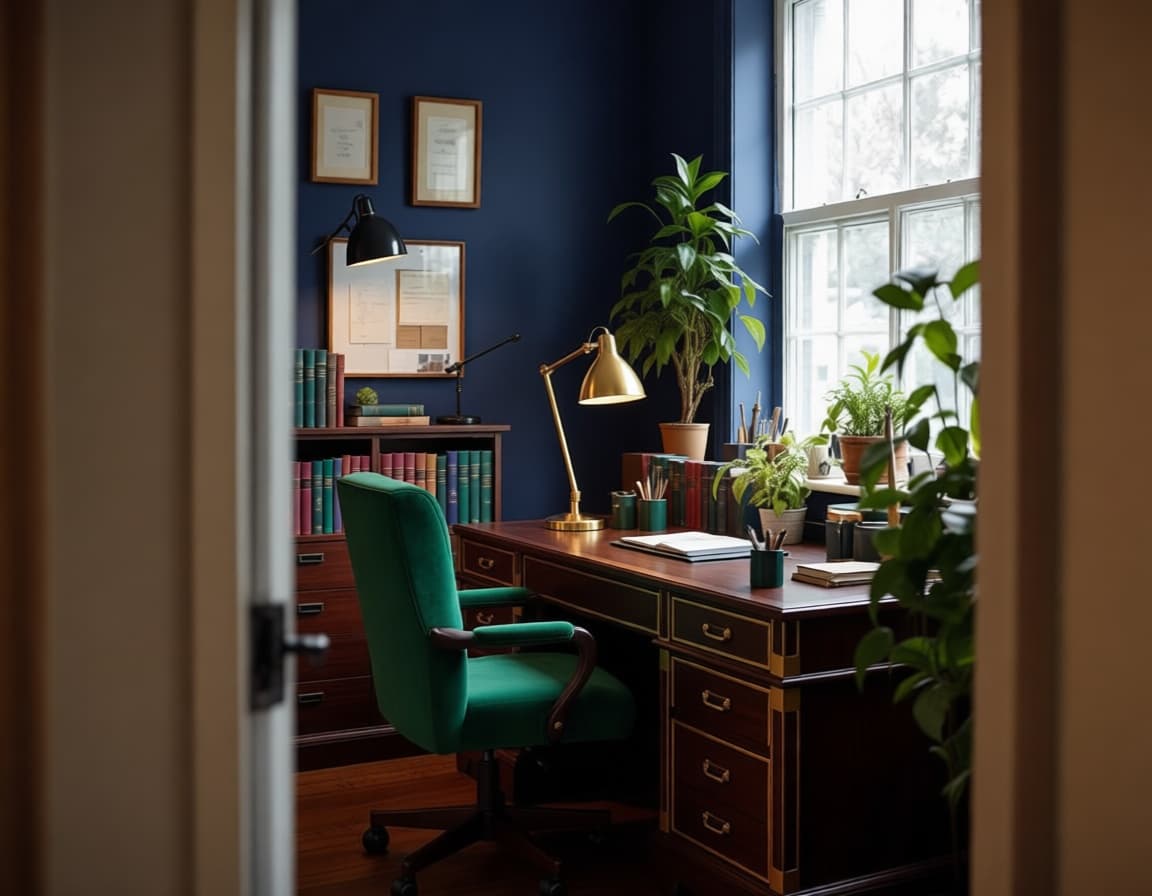
Transformation 2: The Contemporary Powerhouse
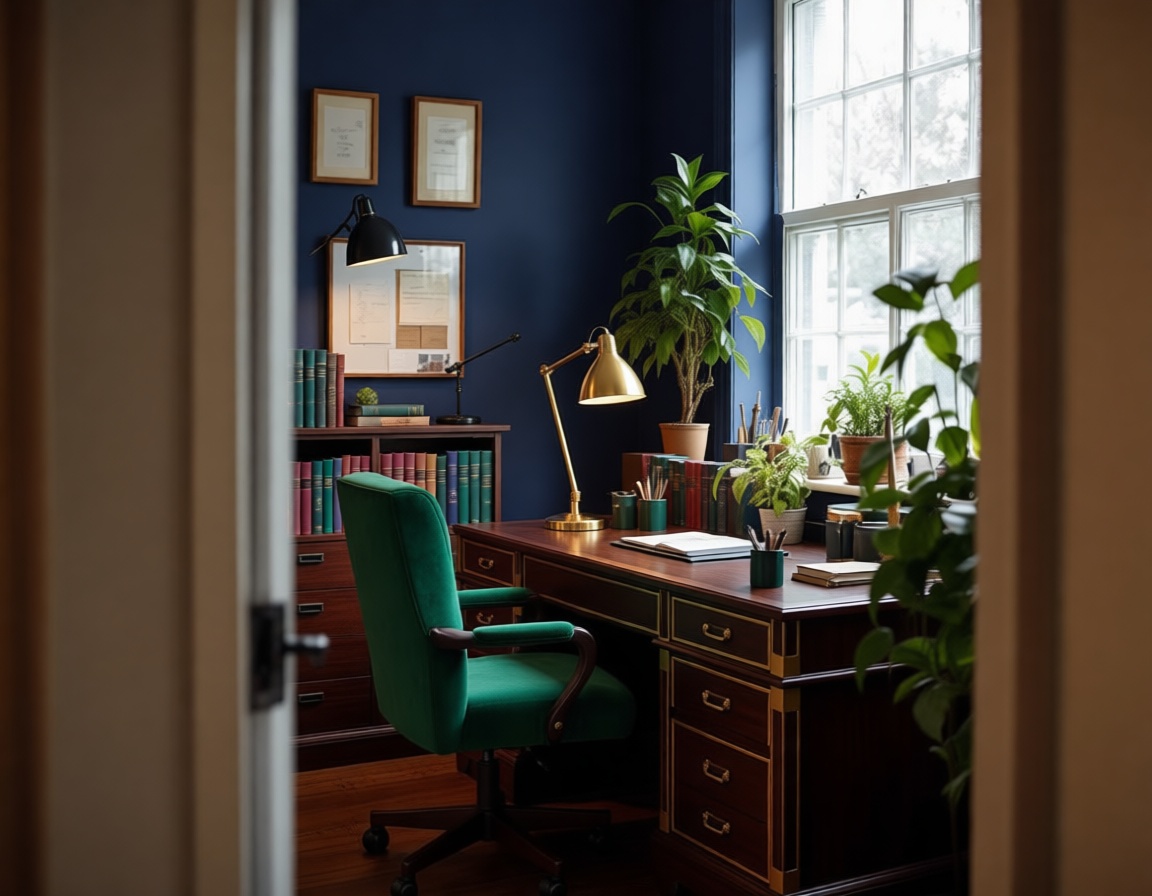
The Vision: Bold, luxurious, and unapologetically dramatic — a workspace that commands attention the moment you walk in.
What Changed: The walls transform to a deep, rich navy blue that wraps the room in sophistication. The desk becomes a stately walnut piece with brass hardware and gold accent trim. The black office chair is replaced by a striking emerald green velvet chair that pops against the dark backdrop. A brass desk lamp casts warm pools of light, and the bookcase is now filled with colorful spines and curated objects instead of generic binders. Gold frames on the walls complete the jewel-box effect.
Why It Works: The navy and emerald combination creates natural visual tension — these rich jewel tones energize rather than drain. Where the modern transformation calms, this one motivates. The brass and gold accents catch light and add warmth to the darker palette, preventing it from feeling heavy.
Who This Works For: Creative professionals who draw energy from their environment, anyone bored by all-white minimalism, people who want their workspace to feel like a design studio rather than a sterile box.
Transformation 3: The Minimalist Retreat
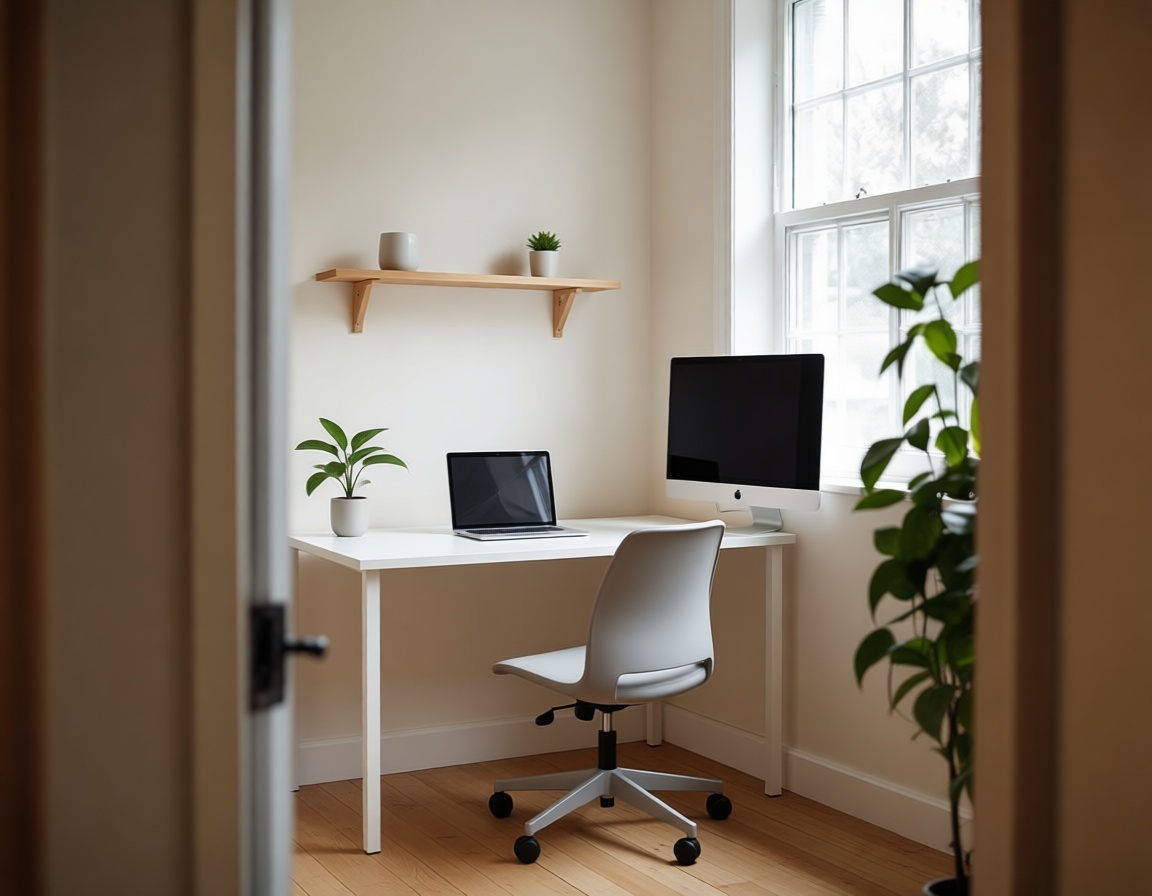
The Vision: Calm, intentional simplicity — only what you need to do your best work, nothing more.
What Changed: The heavy cherry desk is replaced by a clean white desk with slim legs — just enough surface for a laptop, a monitor, and a small plant in a white ceramic pot. The chair slims down to a light gray minimal design. The entire bookcase disappears, replaced by a single floating wood shelf holding only a mug and a tiny succulent. The walls lighten to a soft warm white. The floor shifts to light natural wood. Everything that doesn't directly serve your work is simply gone.
Why It Works: With so little competing for your attention, your focus goes exactly where it should — on the screen in front of you. The warm white palette and natural wood tones keep the room from feeling cold or clinical. It's minimalism that still feels like home, not a hospital.
Who This Works For: People who feel genuinely stressed by visual clutter, deep-focus workers (writers, programmers, analysts), anyone who has tried organizing their office multiple times and keeps ending up back at square one.
Which Direction Would You Choose?
That's the question AI visualization is built to answer. Instead of committing to one style and hoping it works, you can see all three possibilities side by side — using a photo of your actual space, not someone else's.
Here's what these three transformations have in common:
- Same starting room — no construction, no moving walls
- Same basic furniture footprint — the desk stays a desk, the shelves stay shelves
- Completely different emotional impact — one calms, one energizes, one simplifies
The gap between "cluttered office that stresses me out" and "workspace I actually want to sit in" is smaller than you think. Sometimes all it takes is seeing the possibility to start making it real.
Ready to see what your space could become? Try Neat Pilot free↗ — upload a photo of any room and explore multiple design directions in seconds. 2 free makeovers, no credit card required.