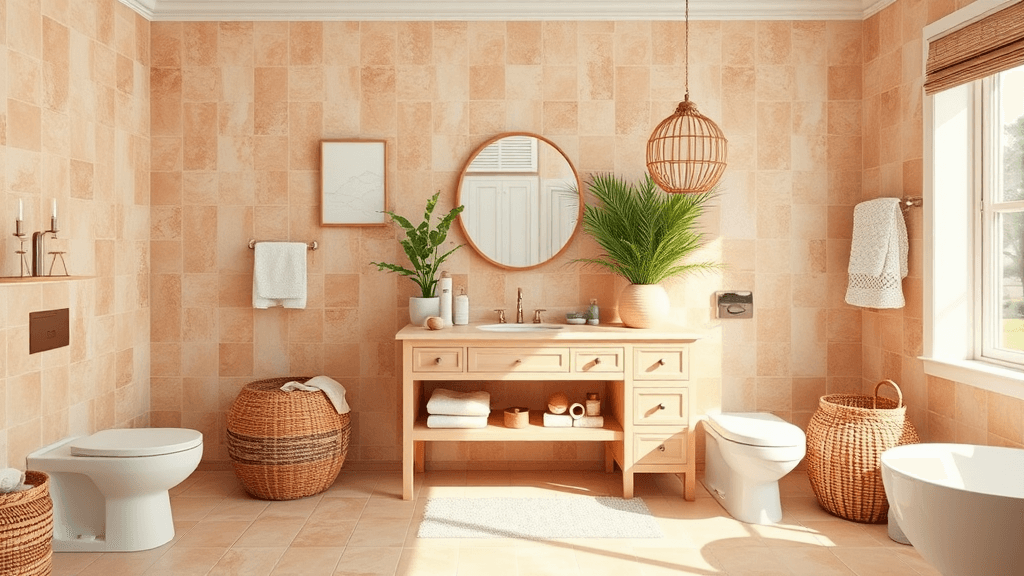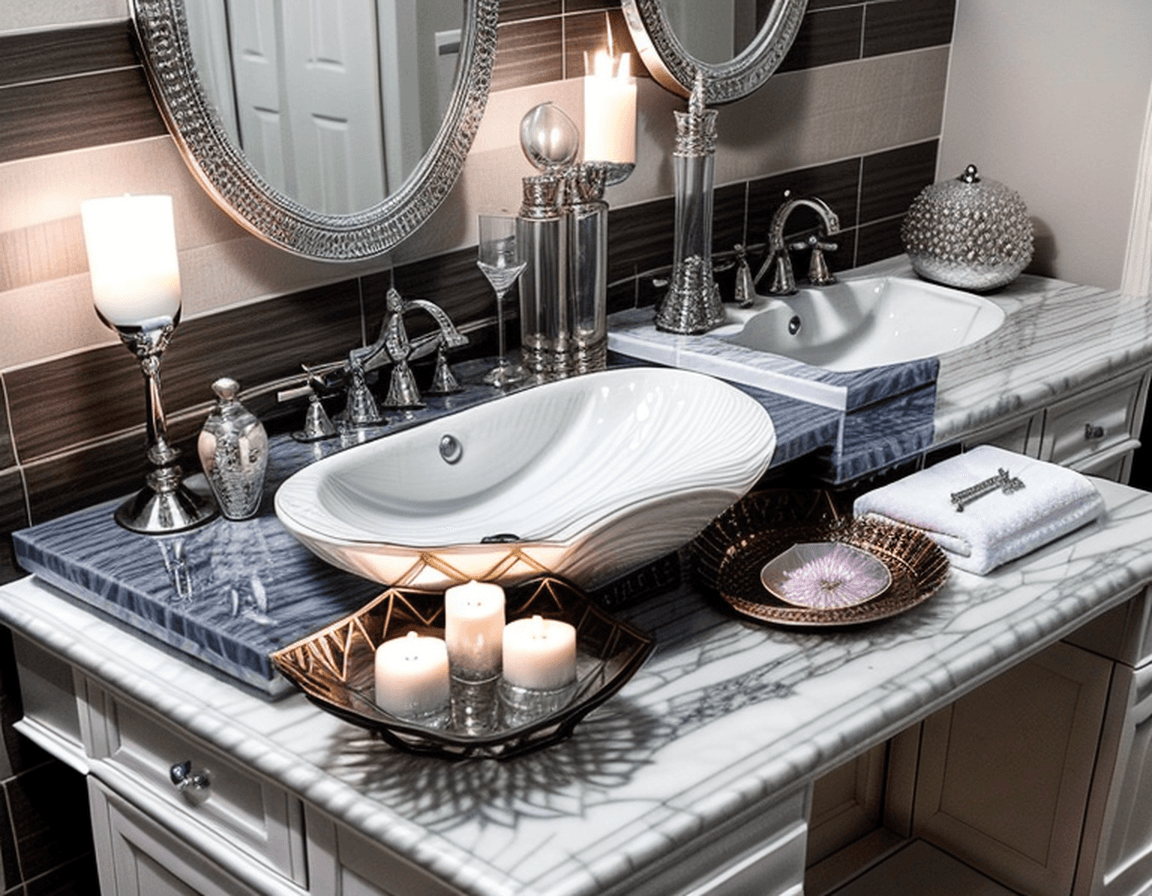
A bold bathroom does not need six patterned surfaces and a sink shaped like modern art. It needs one clear color decision, a functional layout, and enough visual quiet to let that decision work.
These three AI-generated bathroom concepts use coral, mint, cream, black, chrome, and warm wood in different proportions. The useful lesson is not “copy every object.” It is learning how color hierarchy changes the mood—and how you can translate the idea into a real room.
Why colorful bathrooms often go wrong
Bathrooms already contain a lot of visual information: tile joints, mirrors, fixtures, towels, cabinetry, shower glass, and storage. Add several competing colors, and the room can feel busy before your shampoo bottles arrive.
The safer approach is to assign each color a job. Let one create the backdrop. Use another for the focal point. Give the remaining surfaces a quieter supporting role.
That rule creates three distinct options:
- Mint as a calm architectural background
- Coral as a sharp accent against black and cream
- Coral as the full wall color, softened by pale cabinetry
You can borrow one strategy without rebuilding your entire bathroom.
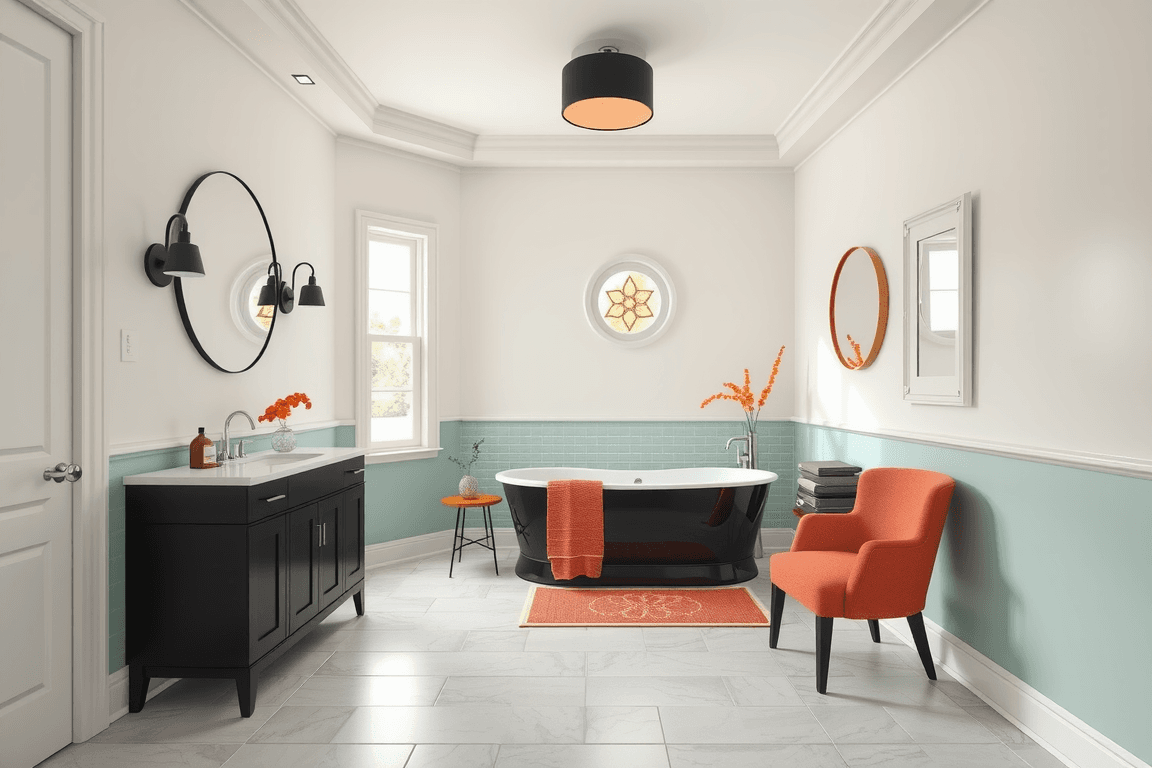
Idea one: mint wainscoting with concentrated coral accents
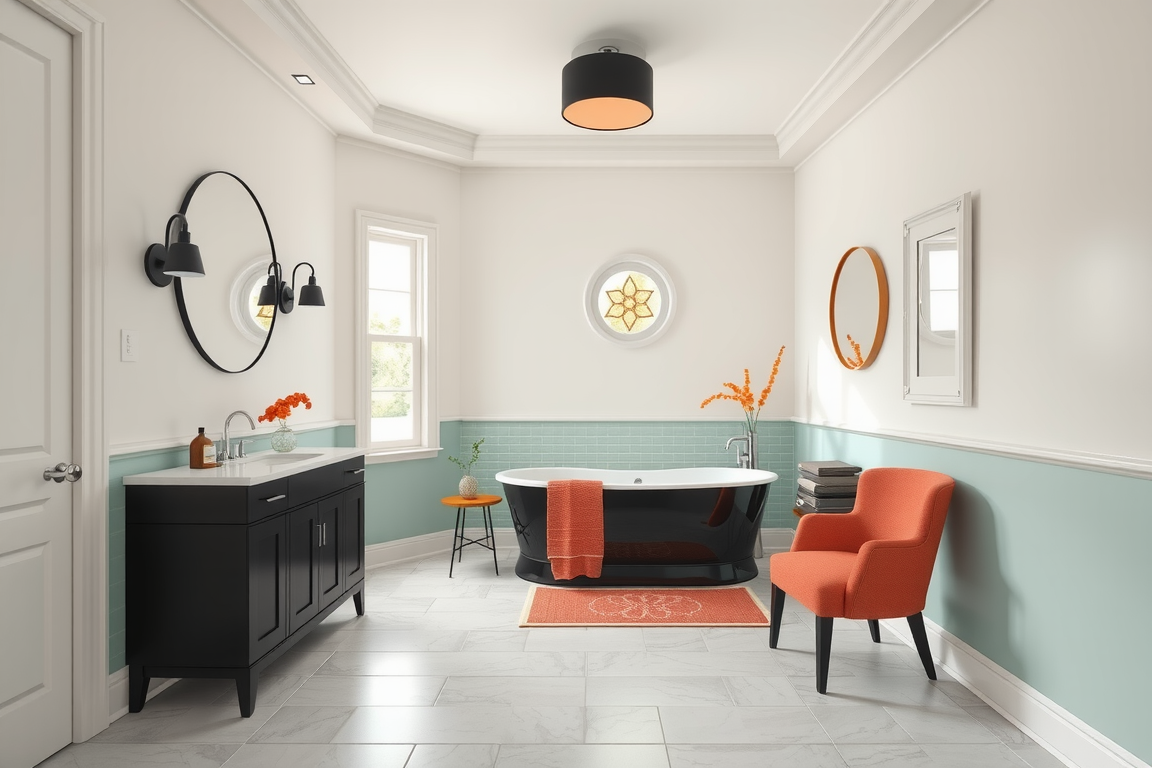
This concept gives mint the largest color field through painted wainscoting and a narrow tile band. The upper walls stay cream, which keeps the room bright and prevents the green-blue tone from becoming sugary.
Black does the grounding work. The vanity and freestanding tub create two strong silhouettes, while coral appears in smaller, movable pieces: a chair, towel, rug, flowers, and a tiny side table.
The circular window adds a playful focal point, but the core formula works without custom architecture: cool background, dark fixtures, warm accents.
You could adapt the look with:
- Mint paint below a chair rail
- A black vanity or black-framed mirror
- Coral towels and a washable bath mat
- Warm white walls instead of stark white
- One round mirror or globe light to repeat the softer shapes
Notice that the coral accents stay visually connected. They do not appear as random dots across every shelf. Grouping them makes the palette feel deliberate.
If a chair is not practical in your bathroom, replace that block of color with a coral hamper, painted stool, or roman shade. Match the visual weight, not the exact furniture.
Idea two: use coral to outline the architecture
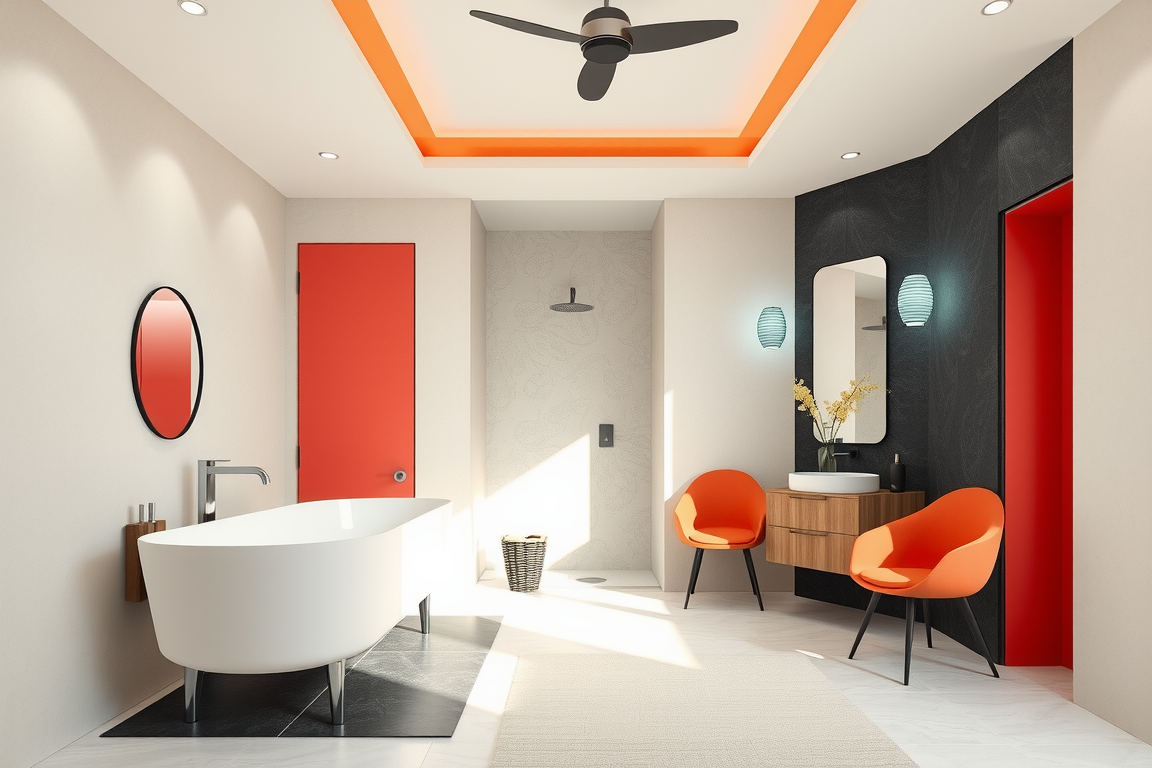
The second concept takes a more graphic approach. Cream walls and a pale floor create the quiet base. A charcoal feature wall, black floor inset, mirror frames, and lighting add crisp contrast. Coral then marks the room’s edges: doors, ceiling recess, and seating.
This is a useful strategy when you want a strong color but do not want it covering the main walls. Painting a door, trim profile, ceiling border, or vanity niche can deliver a bigger visual change than adding more accessories.
Warm wood matters here. The floating vanity keeps the black-and-coral combination from feeling like a showroom or sports logo. Natural grain gives the eye a softer texture between the hard surfaces.
Try a smaller, buildable version:
- Keep the walls warm cream.
- Paint one door or recessed niche coral.
- Repeat coral once near the opposite side of the room.
- Add one deep charcoal surface for contrast.
- Use wood cabinetry to bridge the warm and dark tones.
The generated concept includes more seating than many bathrooms need. Treat those chairs as color blocks, not a shopping list. In a real room, one stool, towel stack, or upholstered vanity seat can carry the same coral note while preserving circulation.
Idea three: wrap the room in coral, then lighten everything below
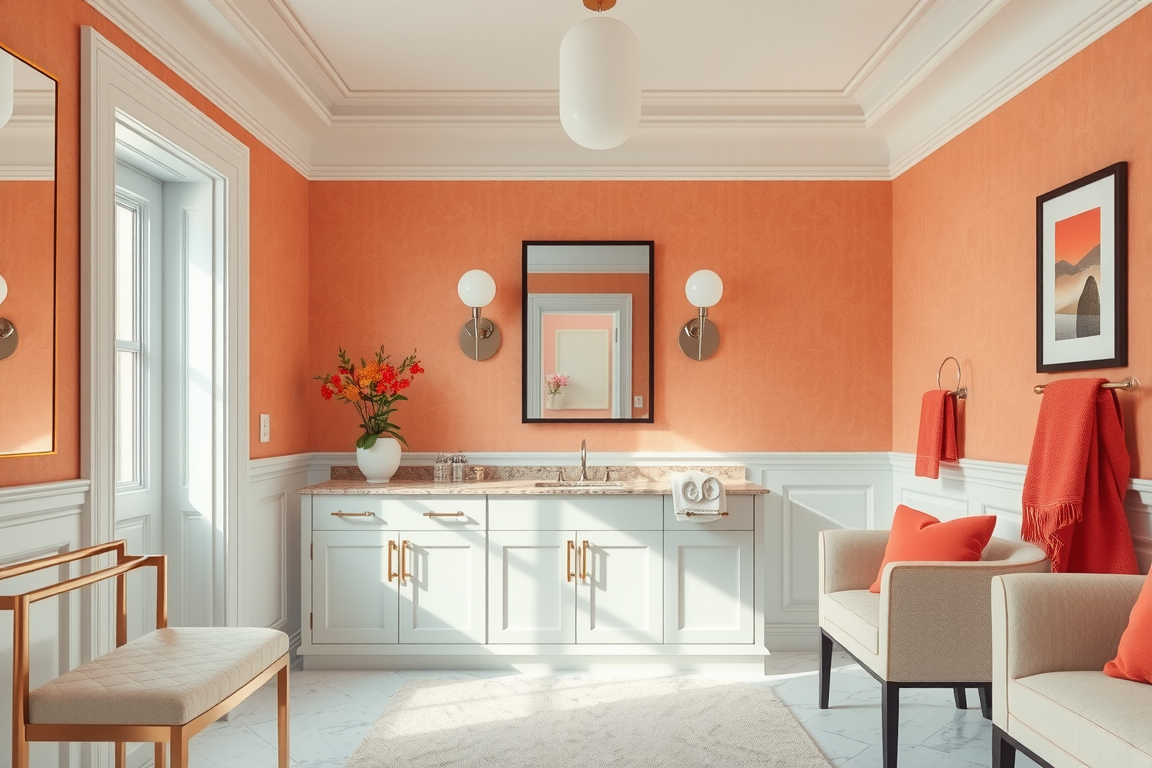
The third concept commits to coral across the upper walls. That could feel heavy, but pale wainscoting, a long light-colored vanity, white trim, and a bright floor keep the saturated color above eye level from closing in.
This room also uses repetition well. Rounded globe lights echo the pendant. Coral towels and cushions relate to the walls. Brass hardware adds warmth without introducing another competing color.
This approach works best in a powder room, dressing bath, or bathroom with good daylight. Smaller rooms can carry bold wall color when the lower half remains visually quiet and storage stays closed.
To translate the idea:
- Paint the upper two-thirds coral
- Keep wainscoting, tile, and cabinetry pale
- Choose closed vanity storage to reduce visual clutter
- Use warm metal hardware instead of mixing several finishes
- Repeat the wall color in two or three textiles at most
The long vanity is important because it creates one uninterrupted horizontal line. If your bathroom has a smaller cabinet, you can get a similar effect with a continuous backsplash or narrow picture ledge.
A better rule than “use less color”
The familiar 60–30–10 decorating rule is useful, but bathrooms benefit from counting fixtures and negative space as part of the dominant 60 percent. Cream walls, clear shower glass, mirrors, pale floors, and white sanitary fixtures all give your eye somewhere to rest.
Then let the secondary color define a meaningful surface—mint wainscoting, a black feature wall, or coral upper walls. Reserve the smallest share for the surprise note: towels, trim, flowers, or one compact piece of furniture.
The goal is not equal representation for every swatch. A livable colorful bathroom needs hierarchy. One color leads, one supports, and the rest know when to leave the room.
Preview the expensive decision first
Paint is reversible. Tile, flooring, plumbing, and custom cabinetry are not. Start by visualizing the decision that would be most expensive to undo.
Upload a clear bathroom photo to Neat Pilot, then test one focused prompt: “add mint wainscoting while keeping the layout and fixtures unchanged,” or “paint the upper walls saturated coral with pale cabinetry and white trim.” Compare the result with your existing light, flooring, and room proportions before buying materials.
You are not asking AI to make the decision for you. You are using it as a visual filter—so the bold idea can prove it belongs in your bathroom before it reaches your renovation budget.